Skip to content
Martins Farm oast cowl markMartins Farm EstateFrant · Est. 1830

The estate

Fifteen acres above Frant

Martins Farm has stood on this ridge since 1830: a working farmyard turned family estate, with the orchard, the meadow and the Weald beyond the gate.
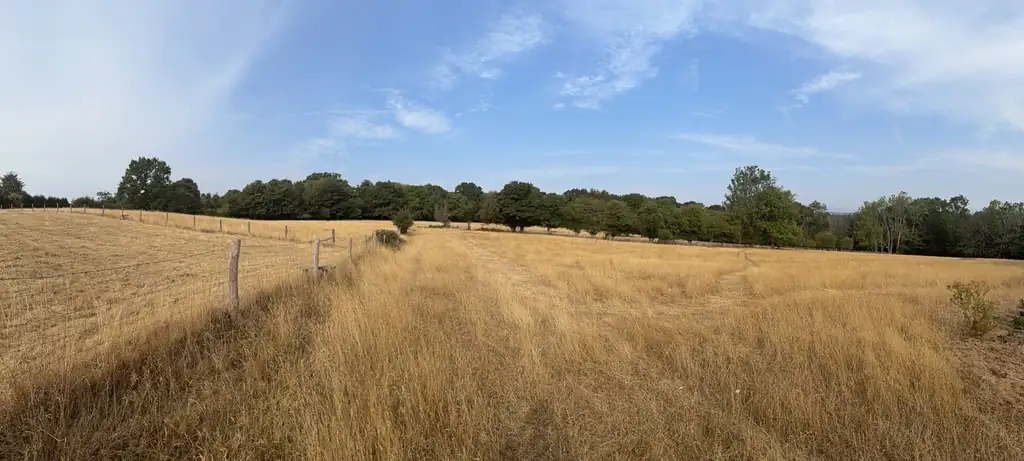

The meadow at Martins Farm looking along the post-and-wire fence line to the tree belt on the ridge, under an open Sussex sky

The estate

A farmyard, and the land around it

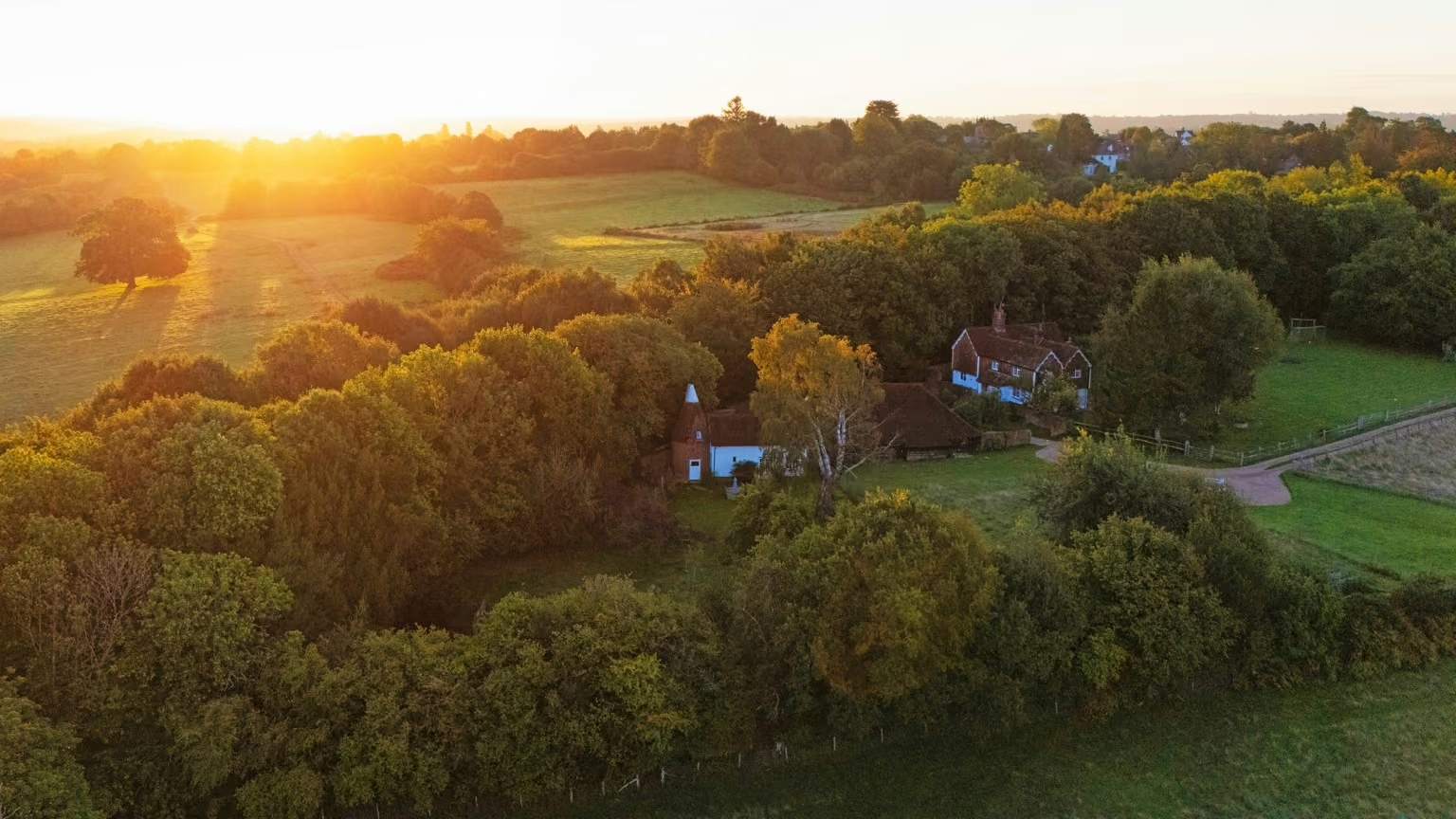
A morning aerial view of Martins Farm, with The Oast and farmhouse among trees and the surrounding High Weald fields beyond
Morning light over Martins Farm and the High Weald

The place

Set in the High Weald at Frant in East Sussex, a short drive south of Royal Tunbridge Wells. The farmhouse, the old barn, the cow byre and a single-kiln oast stand gathered around the yard, still carrying the shape of the farm they once served. Beyond them lie the orchard, the meadow and long views over the Weald.

It is both a family home and a small country estate in the making, held under HINE Estate. Entry is through an automated gate, adding privacy, a sense of seclusion and peace of mind. Guests stay in The Oast; the rest of the land is part of the stay. The barn and cow byre are a quiet space awaiting their next chapter.

In parts

The land, in parts


Orchard and meadow at Martins Farm

Orchard and meadow

Old fruit trees, long grass and wildflowers, left with enough room for the seasons to do their work. Beehives are planned for the meadow; there is no estate honey yet.

Deer at the edge of the neighbouring parkland

Trees and deer

The Oast has its own private, fully enclosed garden. The wider fifteen-acre estate is neither dog-secure nor stock-proof. Dogs should remain on a lead outside the Oast garden; deer and other wildlife can be present. The neighbouring parkland is private.

The estate's south-facing ground, proposed for a vineyard

The vineyard, planned

A small English vineyard is proposed for the estate's south-facing ground. Nothing is planted and no wine exists — it sits with the other plans, not the promises.

On the estate

Buildings and plans

The Oast is the one building given over to guests: a converted single-kiln oast house sleeping four, dog friendly, bookable now.

Everything else here is either being restored or being thought about slowly. We would rather say what is planned than imply it is finished.

The OastThe Wealden iron beneath this ridge

Winston, the golden retriever, standing on the gravel outside the timber door and white weatherboarding of The Oast

Wild Martins Farm

The noisy neighbours


Buzzards over the fields, chiffchaffs in the hedges, woodpigeons and crows on bass, and swifts back from Africa each summer. Deer cross through from the neighbouring parkland at first light, and the dawn chorus is gloriously noisy.

Field guide

What to look and listen for

Seen and heard at Martins Farm

Family records, including entries from our Merlin life list from July to October 2026. Wildlife comes and goes; this list records what has been reported here, not a promise of a sighting.

BuzzardButeo buteo
All yearBroad-winged and unhurried over the fields, often circling on a warm afternoon. Listen for the thin mewing call before you find the bird.
SwiftApus apus
May to AugustBack from Africa for the short summer, screaming low over the yard on clear evenings. Gone again before the apples are ready.Life list · 28 July 2026
RobinErithacus rubecula
All yearThe bird that supervises any digging. Sings through the winter, which is why the garden is rarely completely silent.Life list · 28 July 2026
Blue tit and great titCyanistes caeruleus, Parus major
All yearConstant in the hedges and the old apple trees. The great tit's two-note song is one of the first sounds of the year to change.Life list · Great tit: 28 July 2026
WrenTroglodytes troglodytes
All yearTiny, brown, and far louder than it has any right to be. Usually heard from deep inside a hedge rather than seen.Life list · 31 October 2026
Carrion crowCorvus corone
All yearOn the field edges and the barn roof, in pairs. The estate's most reliable commentary.Life list · 28 July 2026
GoldfinchCarduelis carduelis
All yearLook for the red face and the flash of yellow along each wing.Life list · 28 July 2026
Wood pigeonColumba palumbus
All yearA grey pigeon with a white neck patch, broad white wing markings and a familiar coo.Life list · 28 July 2026
RedstartPhoenicurus phoenicurus
Summer visitorThe orange-red tail often quivers as the bird perches.Life list · 2 August 2026
ChiffchaffPhylloscopus collybita
Mainly spring to autumnA small olive-brown warbler whose repeated two-note song gives it its name.Life list · 2 August 2026
Grey heronArdea cinerea
All yearLong legs, a long bill and grey, black and white plumage. Included in the family's Merlin life list.
PheasantPhasianus colchicus
All yearThe male has rich chestnut markings, a green head and a long tail; the female is mottled brown.Life list · 28 July 2026
Collared doveStreptopelia decaocto
All yearPale grey-brown with a dark collar at the back of the neck.Life list · 31 October 2026
GoldcrestRegulus regulus
All yearA tiny grey-green bird with a bright stripe along its crown.Life list · 31 October 2026
TreecreeperCerthia familiaris
All yearMottled brown above and pale below, with a slender curved bill for searching bark.Life list · 31 October 2026
Canada gooseBranta canadensis
All yearA large goose with a black head and neck and a white patch beneath its chin.Life list · 31 October 2026
RedwingTurdus iliacus
Autumn and winterLook for the pale eyebrow and the rust-red patches on its flanks.Life list · 31 October 2026
Song thrushTurdus philomelos
All yearA brown thrush with a spotted breast. Listen for short phrases repeated several times.Life list · 31 October 2026
White wagtailMotacilla alba
Recorded in OctoberA small black-and-white bird with a long, bobbing tail. Listed under this name in our Merlin life list.Life list · 31 October 2026
BlackbirdTurdus merula
All yearThe male is black with a yellow-orange bill; females are brown. Listen for its mellow, flowing song.Life list · 31 October 2026
Deer
All year, best at first lightCrossing in from the neighbouring parkland at dawn and again at dusk. Stand still at the field gate and wait rather than walk towards them.

Wider High Weald

Characteristic of this landscape rather than recorded on the farm — worth knowing if you are walking further afield.

Tawny owlStrix aluco
All year, loudest autumn and winterA woodland bird of the wider Weald. The call-and-answer between two birds is what people mistake for one owl.
NightingaleLuscinia megarhynchos
April to JuneThe South East holds a large share of the British breeding population, in scrub and coppice. A reason to walk a Weald reserve at dusk in May.
Fallow deerDama dama
All year, rut in OctoberLong established in the parkland estates of this landscape. Autumn is when they are heard rather than seen.
Deer at the edge of the neighbouring parkland

Families

A little more room to be children

Children have the run of a different kind of landscape here: meadow paths, old apple trees, muddy boots and deer appearing at the field edge in the early morning. There is space to explore, pause and invent the day rather than have every hour arranged.

The Oast sleeps up to four. Frant, Tunbridge Wells and the wider High Weald put walks, gardens, castles, pubs and rainy-day rescue plans within easy reach.

The family

One family, two hemispheres


Martins Farm is home to Ali, Sharon, Eddie and Winston. Ali is English; Sharon grew up in Beaufort, Victoria; Eddie belongs comfortably to both worlds. The farm brings those threads together: Sussex brick and Australian ease, an AGA in the kitchen and a welcome that is warm without standing on ceremony.

We see ourselves as custodians rather than owners of a finished thing. The work is gradual: repairing buildings, planting for the future, making space for wildlife and opening parts of the estate to guests without turning the whole place into a hotel.

“We want Martins Farm to feel cared for, not curated: somewhere with a history behind it and a reason to return.”

Ali, Sharon, Eddie & Winston · Custodians

A vignette

The Morgan

Parked in the barn is a 1980 Morgan 4/4 four-seater, recently returned to British Racing Green. Built around an ash frame and a stubbornly traditional idea of motoring, it feels entirely at home among the old farm buildings.

Its colour became the estate's green: on the website, the signs and the things still to come. The Morgan emerges on dry days, preferably when the road is empty and nobody is in a hurry.

The 1980 Morgan 4/4 in British Racing Green at Martins Farm

A moving glimpse

The Morgan, filmed

A short film from the estate's own Instagram: the 4/4 out of the barn on a dry afternoon. Nothing loads until you press play.
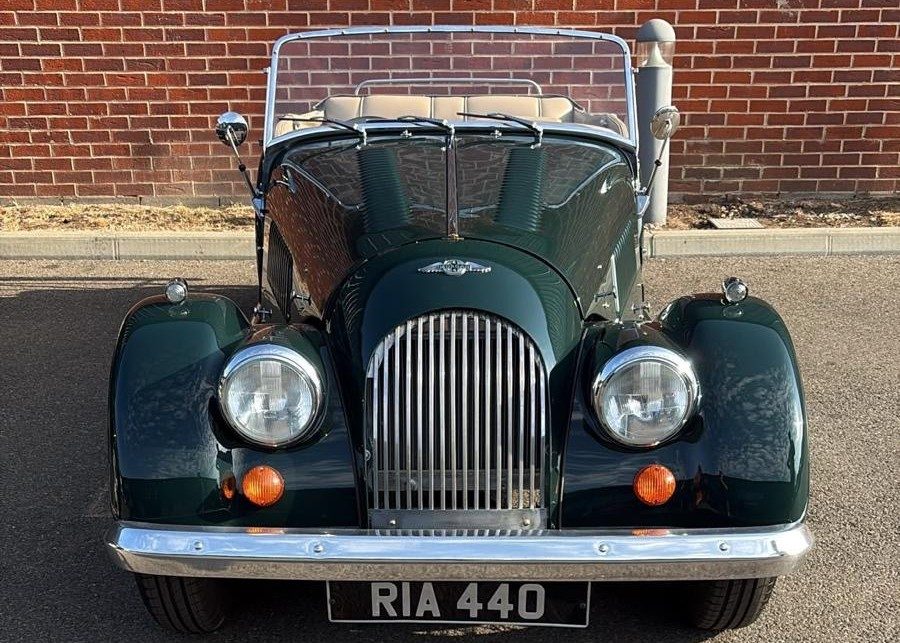
The estate's Morgan in British Racing Green, photographed head-on with chrome headlamps and radiator grille, parked before a red brick wall

No sound until you play it

Watch the Morgan film on Instagram (opens in a new tab)

Come and walk it

Fifteen acres, one oast house and one golden retriever with strong views on hosting.

Check dates at The Oast

We use essential cookies, plus optional cookies for analytics and advertising. Privacy policy